
Transform Your Travels with Pilates: A 20-Minute Routine

Updated: Aug 27
Whether you're heading overseas for a holiday, traveling for work, or enjoying a weekend away, long flights, road trips, and sightseeing can leave your body feeling stiff, tight, and fatigued. Hours of sitting can lead to tight hips, poor posture, reduced circulation, and lower back discomfort. The good news? Just 20 minutes of Pilates can help you feel stronger, more mobile, and ready to enjoy your travels.
At Bali Pilates Plus, we believe movement is one of the best ways to care for your body while you're away from home. This simple Pilates mat routine requires no equipment, making it perfect for your hotel room, Airbnb, beach villa, or even a quiet corner of the airport lounge. In just 20 minutes, you'll improve spinal mobility, activate your deep core, release tight hips, and feel genuinely refreshed — no equipment, no excuses.
Why is Pilates Great While Traveling?
Traveling often means spending hours sitting on planes, trains, or in cars. Even the most active holidays involve carrying luggage, walking on uneven ground, and sleeping in unfamiliar beds. Pilates helps counteract these challenges by restoring mobility, improving posture, and strengthening the muscles that support your spine. At Bali Pilates Plus, we teach the Classical Pilates method — a complete system built on breath, control, and precision that translates seamlessly to any space, anywhere in the world.
This routine moves your spine through all three planes of movement:
Flexion & Extension (Cat-Cow, Pelvic Tilts)
Rotation (Thread the Needle, Saw)
Lateral Flexion (Mermaid)
Combined with deep core activation, glute strengthening, and hip mobility, you'll finish this workout feeling taller, stronger, and more comfortable.
Your 20-Minute Travel Pilates Routine
Warm Up
Before strengthening your body, gently prepare your spine and activate your deep stabilizing muscles.
1. Pelvic Tilts (8–10 repetitions)
Lie on your back with your knees bent and feet hip-width apart.
Inhale to prepare.
Exhale and gently tilt your pelvis, flattening your lower back into the mat.
Inhale to return to neutral.
Move slowly and smoothly.
Benefits: Activates the deep core, improves pelvic awareness, and gently mobilizes the lumbar spine.
2. Hip Sways (8–10 repetitions each side)
Stay lying on your back with your knees bent and feet hip-width apart.
Extend your arms out to the sides in a T position, palms facing down.
Inhale to prepare.
Exhale as you slowly lower both knees to one side, keeping your upper body completely still.
Press the opposite shoulder gently into the mat to prevent it from lifting.
Turn your head to look towards the arm on the opposite side to your knees.
Inhale to pause.
Exhale as you bring your knees back through center and lower them to the other side, turning your head in the opposite direction.
Continue alternating sides with slow, controlled movement.
Benefits: Releases tension through the lower back and hips, mobilizes the lumbar spine, and gently introduces thoracic rotation — the perfect preparation for deeper spinal movement.
3. Cat-Cow Stretch (6–8 repetitions)
Come onto your hands and knees.
Inhale as you lengthen your spine, lifting your chest and tailbone.
Exhale as you round your spine, drawing your abdominals in.
Continue flowing with your breath.
Benefits: Mobilizes the entire spine and relieves stiffness after traveling.
4. Thread the Needle (4–5 repetitions each side)
Stay on your hands and knees.
Inhale and reach one arm towards the ceiling.
Exhale as you thread that arm underneath your body.
Rest your shoulder and side of your head lightly on the mat.
Return to the starting position before repeating on the opposite side.
Benefits: Improves thoracic rotation while releasing tension through the shoulders and upper back.
Restore Spinal Mobility
5. Spine Stretch Forward (6–8 repetitions)
Sit tall with your legs extended hip-width apart.
If your hamstrings or lower back feel tight, sit on a small cushion or bend your knees with your feet flat on the floor. This allows your pelvis to sit more upright and gives your spine greater freedom to move.
Reach your arms forward at shoulder height.
Inhale to lengthen through the crown of your head.
Exhale as you gently nod your chin and articulate your spine forward one vertebra at a time.
Inhale at the end of the movement.
Exhale as you slowly stack your spine back up.
Teaching Tip: Stabilize your hips and pelvis while allowing your spine to move above them.
Benefits: Improves spinal articulation, lengthens the back body, and relieves tension after prolonged sitting.
6. Saw (5 repetitions each side)
Sit with your legs slightly wider than hip-width apart.
If sitting upright is difficult, sit on a small cushion or bend your knees with your feet on the floor.
Extend your arms out to shoulder height.
Inhale to sit tall and rotate your upper body.
Exhale as you reach your front hand towards the outside of the opposite foot, imagining you're "sawing" past your little toe with three gentle pulses.
Return to center before repeating on the other side.
Teaching Tip: Keep your hips and pelvis stable while rotating and flexing through your spine.
Benefits: Improves thoracic mobility, stretches the hamstrings, and strengthens postural control.
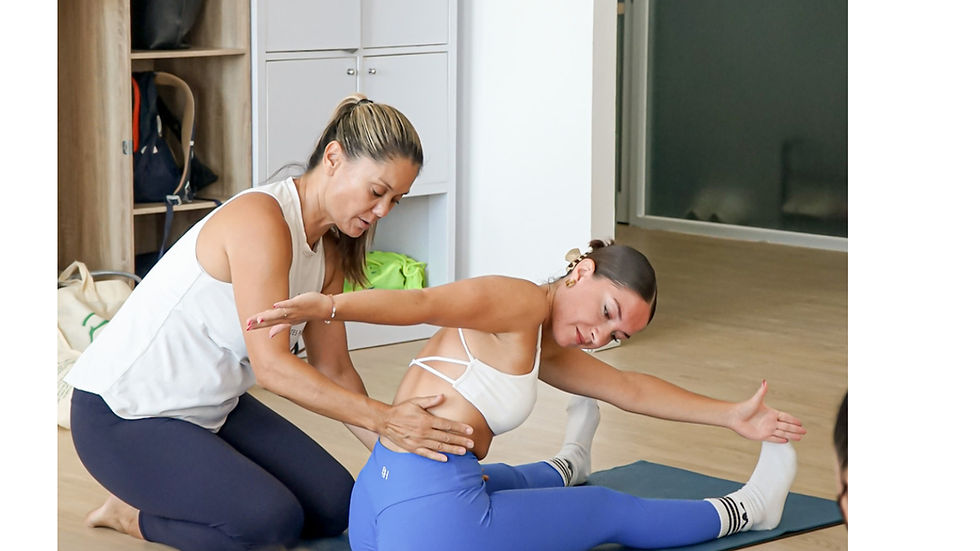
7. Mermaid Stretch (3–4 repetitions each side)
Sit comfortably with both legs folded to one side.
Place one hand beside your hip.
Reach the opposite arm overhead.
Gently side bend and breathe deeply into the open side of your ribcage.
Benefits: Opens the ribs, lengthens the waist, and restores lateral flexibility.
Strengthen Your Core
8. Dead Bug (8–10 repetitions each side)
Lie on your back with your knees in tabletop and arms reaching towards the ceiling.
Keep your pelvis stable.
Slowly lower your opposite arm and leg.
Return to center and alternate sides.
Benefits: Strengthens your deep core while maintaining spinal stability.
9. Toe Taps (10 repetitions each leg)
Stay lying on your back with your knees in tabletop.
Slowly lower one foot to tap the floor.
Return to tabletop before alternating.
Benefits: Improves abdominal control and pelvic stability.
10. Chest Curl (8–10 repetitions)
Place your hands behind your head with your elbows wide.
Exhale and gently curl your head, neck, and shoulders from the mat.
Inhale to hold briefly.
Lower slowly with control.
Benefits: Strengthens the upper abdominals and prepares your body for the abdominal series.
11. Single Leg Stretch (10 repetitions each side)
Stay lifted in your chest curl.
Hug one knee towards your chest while extending the opposite leg.
Switch sides with slow, controlled movements.
Lower your head if your neck becomes tired.
Benefits: Builds deep abdominal strength and coordination.
12. Double Leg Stretch (8 repetitions)
Hug both knees into your chest.
Reach your arms overhead and legs away simultaneously.
Circle your arms back around as you return.
Benefits: Challenges whole-body core strength and control.
13. Forearm Plank (30–45 seconds)
Position your elbows directly beneath your shoulders.
Extend your legs behind you.
Draw your abdominals in and gently squeeze your glutes.
Maintain one long line from head to heels.
Benefits: Strengthens your core, shoulders, and entire postural system.
Wake Up Your Glutes
After hours of sitting, your glute muscles often become less active. These exercises help switch them back on.
14. Shoulder Bridge (10 repetitions)
Press through your heels to lift your hips.
Pause briefly.
Lower with control.
Benefits: Activates the glutes, hamstrings, and posterior chain.
15. Clamshells (12–15 repetitions each side)
Lie on your side with knees bent.
Keep your feet together.
Lift your top knee while keeping your pelvis still.
Lower slowly.
Benefits: Strengthens the glute medius and improves hip stability.
16. Swimming (30 seconds)
Lie face down with your arms overhead.
Lift the opposite arm and leg.
Alternate sides with control.
Benefits: Strengthens the back, glutes, and postural muscles.
Release Tight Hips
17. Figure 4 Stretch (30–45 seconds each side)
Cross one ankle over the opposite knee.
Hold behind your supporting thigh.
Gently draw your leg towards your chest.
Benefits: Releases the glutes and deep hip muscles.
18. Hip Flexor Stretch (30 seconds each side)
Step into a kneeling lunge.
Gently tuck your pelvis underneath.
Lean forward until you feel a stretch through the front of your hip.
Benefits: Opens tight hip flexors and improves posture.
Finish Your Practice
Standing Roll Down (3 repetitions)
After your hip stretches, bring your feet together and stand tall.
Inhale to lengthen your spine.
Exhale as you slowly roll down one vertebra at a time.
Relax your arms and soften your knees if needed.
Inhale at the bottom.
Exhale as you slowly roll back up to standing.
Repeat three times, allowing each repetition to feel smoother and more relaxed.
Benefits: Releases the entire spine, improves mobility, and leaves you feeling taller, lighter, and ready to enjoy your day.
Tips for Getting the Most Out of Your Travel Pilates Workout
Move slowly and with control rather than rushing.
Coordinate every movement with your breath.
Focus on quality over quantity.
If a position feels uncomfortable, reduce the range of motion or modify as needed.
Aim to complete this routine every day while traveling — even 20 minutes can make a noticeable difference.
Frequently Asked Questions
How often should I do Pilates while traveling? If possible, perform this routine once a day. Even completing it every second day can help reduce stiffness, improve posture, and maintain your strength while you're away.
Do I need any Pilates equipment? No. This workout is designed to be completed using only your body weight. A yoga mat or towel is helpful but not essential.
Is this Pilates workout suitable for beginners? Yes. Most exercises can be modified to suit your mobility and strength. If you're new to Pilates, move slowly and only work within a comfortable range of motion.
Why do my hips feel tight after traveling? Long periods of sitting shorten the hip flexors and reduce circulation. The hip mobility and glute activation exercises in this routine help restore movement and improve posture.
Can Pilates help reduce lower back pain after flying? For many people, yes. Gentle spinal mobility, core activation, and hip stretching can help relieve the muscular stiffness that often develops during long flights. If you have persistent or severe back pain, consult your healthcare provider before starting any exercise program.
Take Pilates Wherever You Go
One of the greatest things about Pilates is that you can practice it almost anywhere. A small amount of movement each day can have a big impact on how you feel throughout your travels. Whether you're exploring Europe, relaxing on a tropical island, or traveling for business, this 20-minute Pilates routine will help you move with greater ease, improve your posture, and keep your body feeling its best.
If you're based in Bali or planning a visit, we'd love to welcome you to Bali Pilates Plus. Our experienced Teachers offer private Pilates sessions and small group reformer classes to help you build strength, improve mobility, and move with confidence. Book a class →
If you're thinking about turning your practice into a profession, we offer EYT certified Pilates teacher training in Bali — an internationally recognized 300-hour program taught by Master Teacher Trainer Vianca Rechtman.
Safe travels — and remember, your Pilates practice can go wherever you do.
Comments